
Sunshiki closes its pre-seed round to cut greenhouse gases from cattle — with seaweed
Sunshiki Co., Ltd. (HQ: Shibuya-ku, Tokyo; CEO: Ryo Kubota; hereafter "Sunshiki") today announced that it has closed its pre-seed round, led by the Circular Economy & Nature Positive Fund I (managed by SBI New Business Investment Co., Ltd.), with participation from Ando-Hazama Corporation.
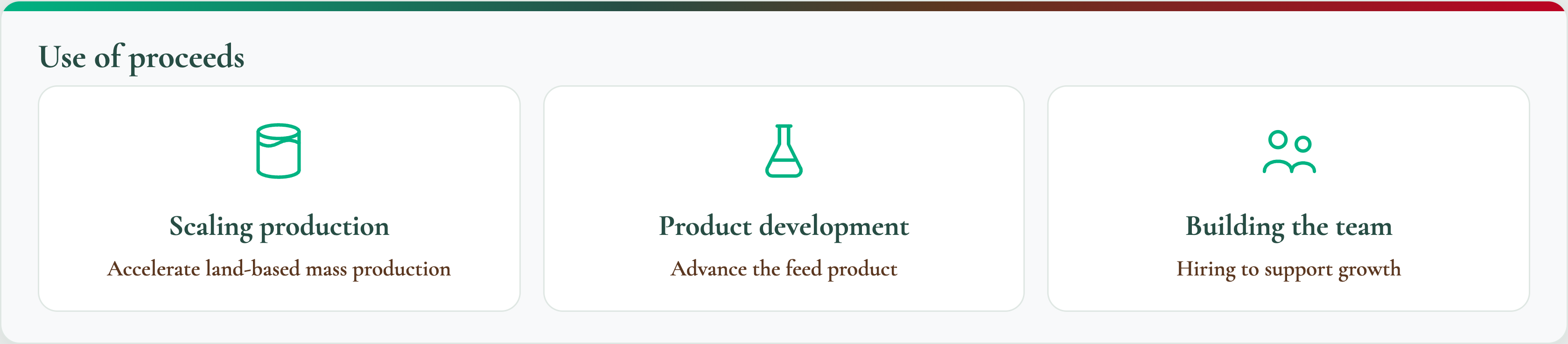
The proceeds will be used to scale up production, advance product development, and strengthen the team.
Background: Cow burps and greenhouse gases
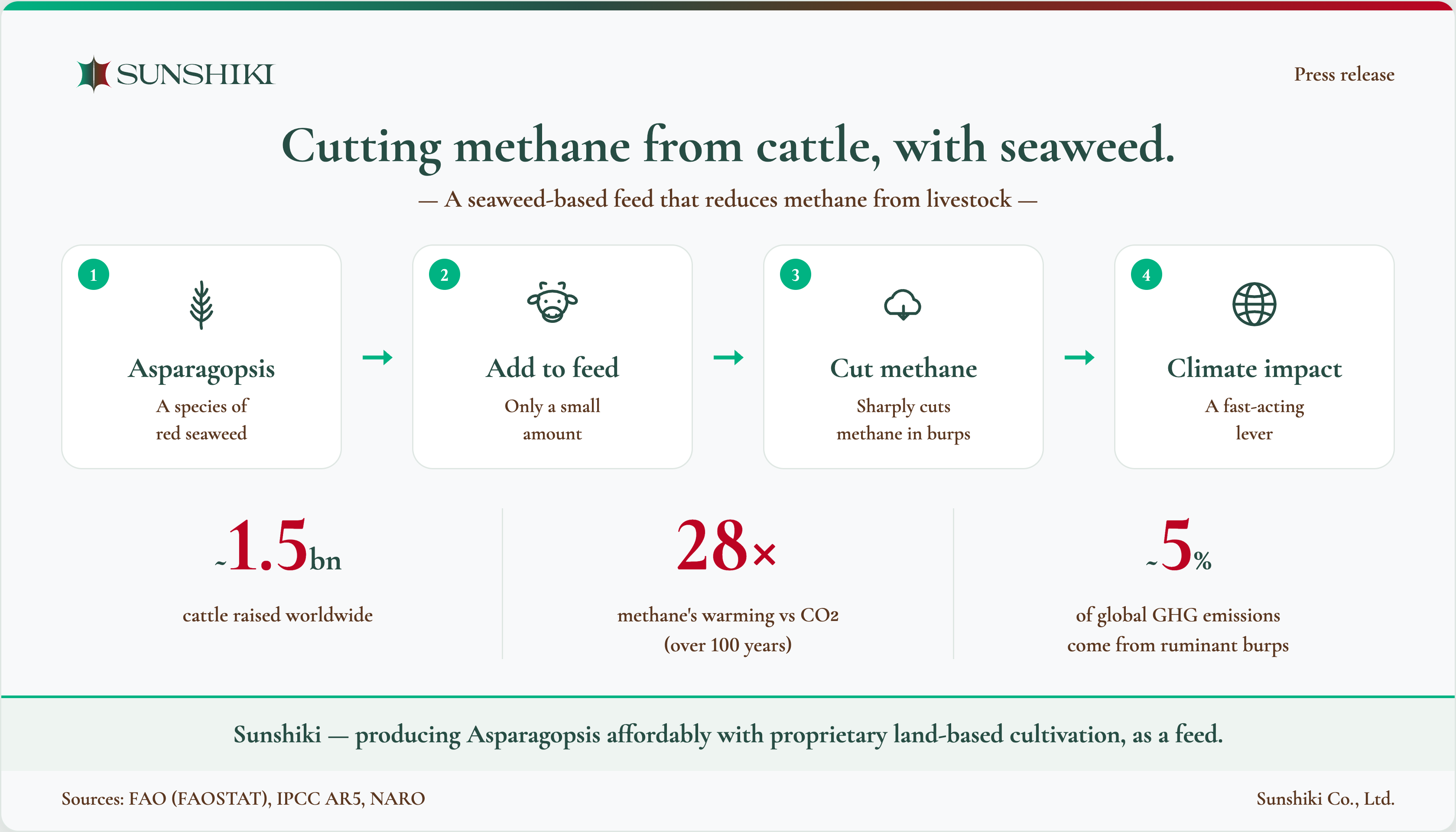
Methane is a greenhouse gas with roughly 28 times the warming power of CO₂ [1], and reducing it is considered one of the fastest-acting levers in the fight against climate change [2]. With an estimated 1.5 billion cattle worldwide [3], the methane that ruminants such as cattle and sheep emit — mainly through burps — accounts for about 5% of global greenhouse-gas emissions [4].
Solution: A feed made from Asparagopsis, mass-produced through land-based cultivation
As a solution, Sunshiki is developing a feed product made from Asparagopsis, a red seaweed. Studies around the world have shown that adding a very small amount of Asparagopsis to cattle feed can sharply reduce the methane in their burps [5].
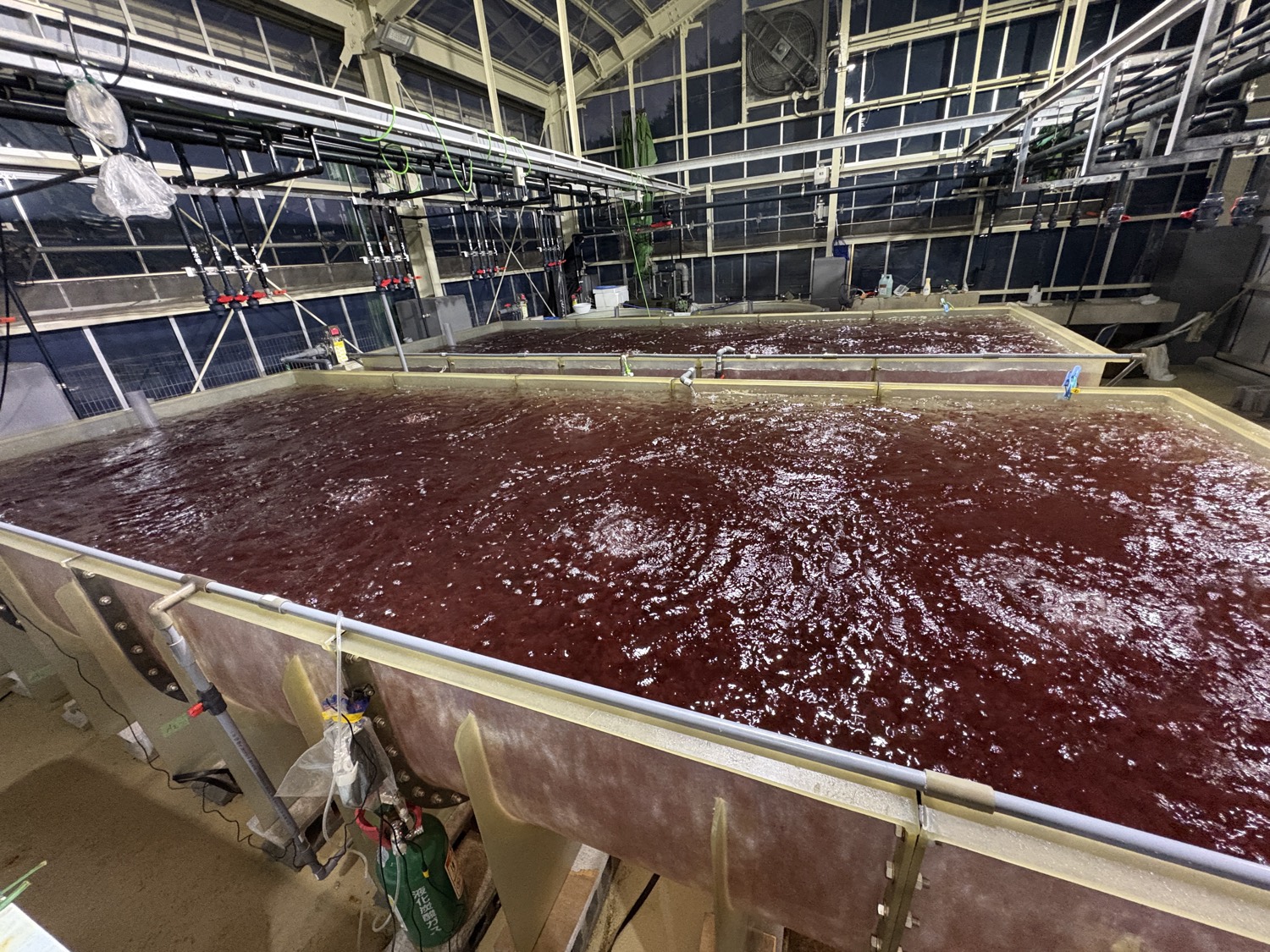
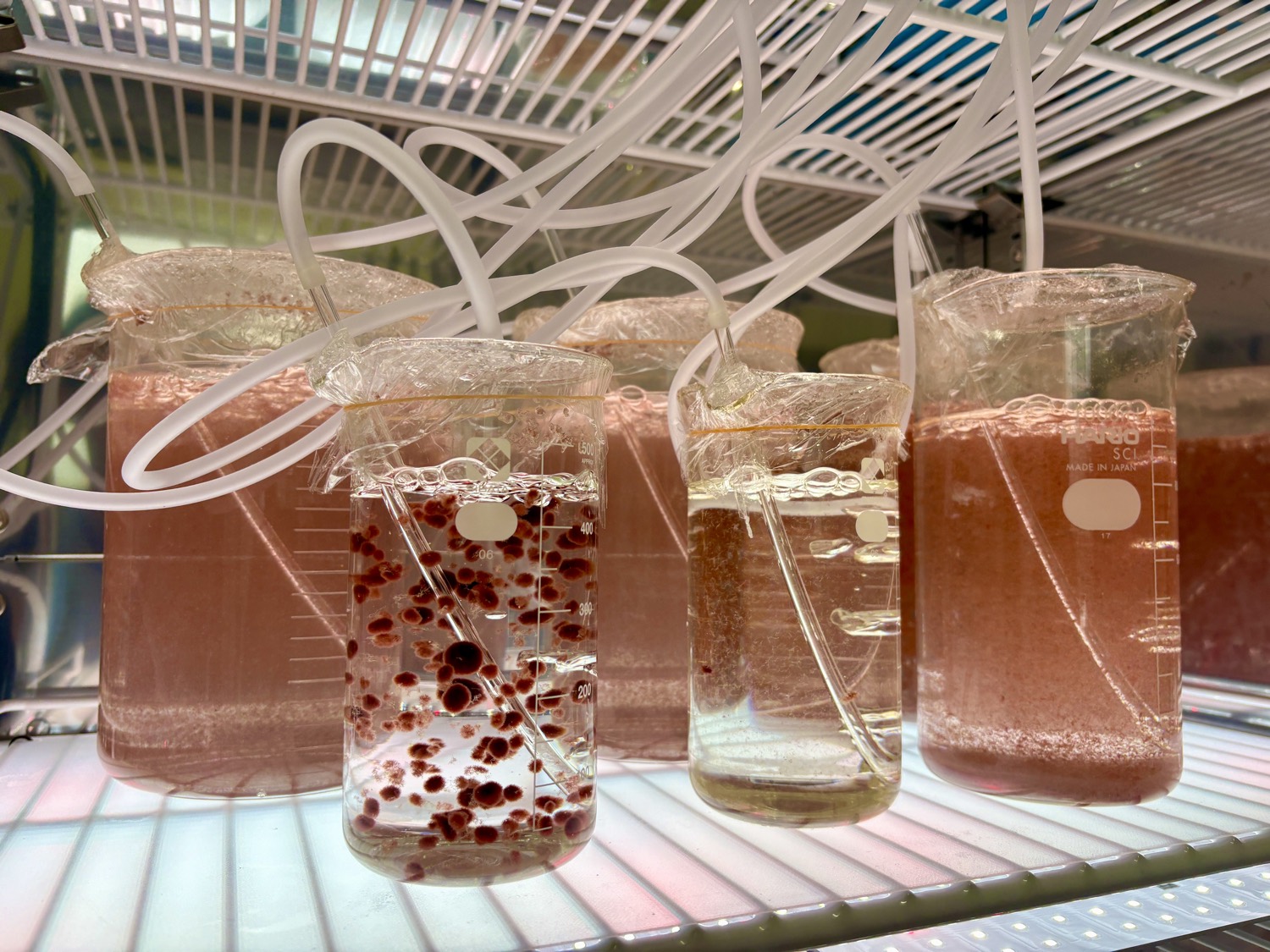
However, the mass-production technology to cultivate Asparagopsis stably and affordably — and to turn it into a product while preserving its active compounds — is not yet well established anywhere in the world. As a Kochi University startup, Sunshiki builds on the university's research to develop proprietary land-based cultivation technology that can mass-produce Asparagopsis at low cost and turn it into a feed product.
Milestones
- Production: Achieved stable production of Asparagopsis in commercial-scale pilot tanks using proprietary land-based cultivation.
- Research: Presented our cultivation technology and production results at academic conferences; filed domestic and international patents.
- Recognition: Selected for the Ministry of the Environment's startup support program and J-Startup WEST. Certified as a Kochi University–launched startup. Featured across media including NHK, Fuji Television, TV Tokyo, Weekly Economist, and Nikkei GX.


The Seaweed Platform
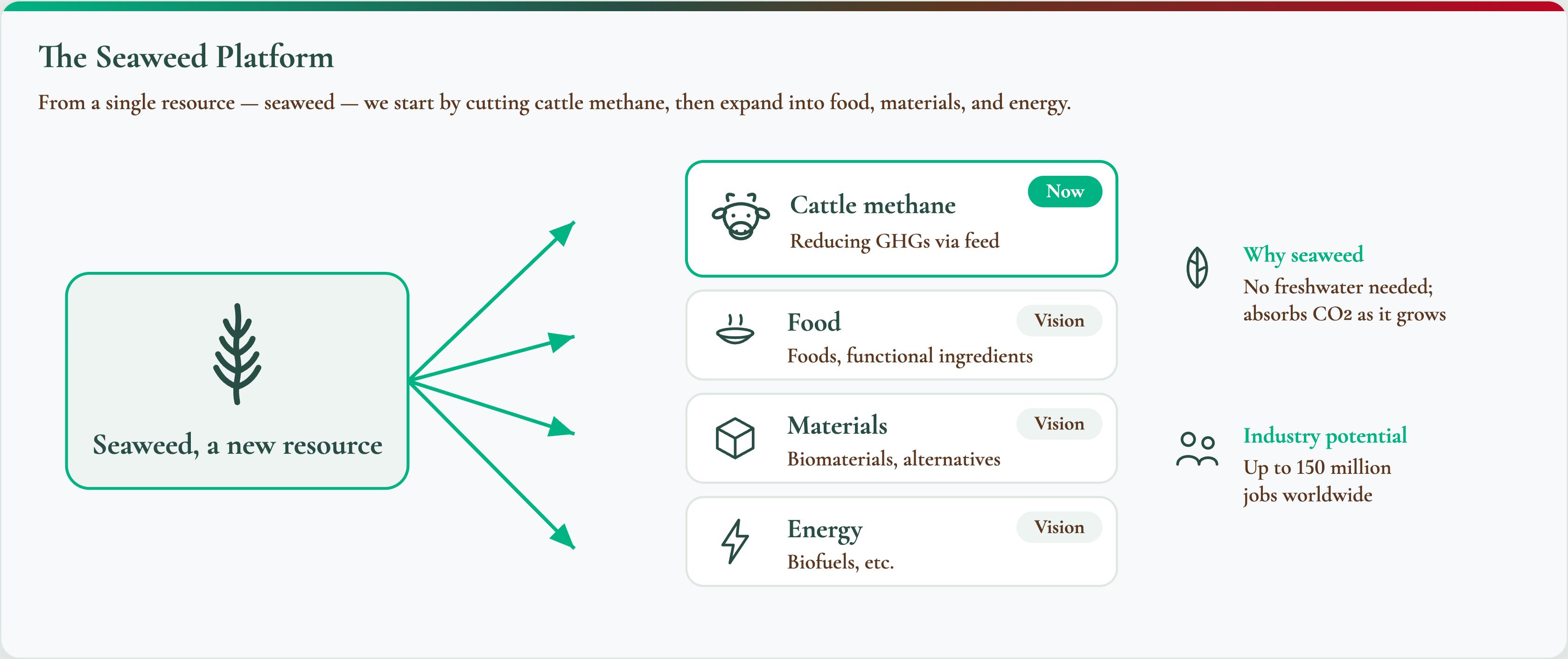
Beyond Asparagopsis, Sunshiki envisions seaweed itself as a new resource for global challenges — an idea we call the Seaweed Platform. Seaweed requires no freshwater, absorbs CO₂ as it grows, and holds the potential to become food, materials, and energy.
Seaweed is drawing growing attention worldwide as a new resource; the World Bank estimates the seaweed industry could create up to 150 million jobs [6]. Japan, with one of the world's richest histories of seaweed cultivation and cuisine, is well positioned to lead in this field.
Starting by cutting cattle's greenhouse gases with Asparagopsis, Sunshiki will expand the potential of seaweed as a new resource — one step at a time — under the Seaweed Platform.
Use of proceeds
The proceeds from this round will be used mainly for:
- Scaling up production
- Product development
- Strengthening the organization to support growth
Comments from investors
Akihiro Ōme — Senior Director, SBI New Business Investment Co., Ltd. (Circular Economy & Nature Positive Fund I)
We are delighted to have the opportunity to invest in Sunshiki. Curbing the methane that ruminants such as cattle emit through their burps is a global challenge. Feeding Asparagopsis to cattle can dramatically reduce those emissions, yet until now production costs have been high and the mass-production technology has not been well established. With its technology to mass-produce Asparagopsis stably and at low cost, Sunshiki has the potential to be a game-changer in this field. We invested in the expectation that, in the near future, Sunshiki will grow globally as a Japan-born seaweed-tech startup. Together with Ryo Kubota and the entire team, we will do everything we can to support Sunshiki's continued growth.
Hotaka Shimizu — General Manager, Corporate Planning Dept., Corporate Strategy Division, Ando-Hazama Corporation
We are very pleased to take part, through this investment, in Sunshiki's greenhouse-gas-reduction business using Asparagopsis. This is an ambitious challenge to solve environmental issues in livestock farming, and we believe it holds great potential to become a game-changer in climate action. We have high expectations for the stable-production and processing technologies Sunshiki has built through its demonstrations, and for its drive toward commercialization. Although this is a new domain for us as a construction company, we position it as an important initiative toward the "creation of environmental value" set out in our long-term vision. We will walk alongside Sunshiki's challenge and work to create new value for a sustainable society.
Comment from CEO Ryo Kubota
The methane in cattle burps is a potent greenhouse gas, and reducing it is one of the fastest-acting levers in climate action. Within that space, we believe Asparagopsis is one of the most promising options. Yet the technology to mass-produce it stably and at low cost is still not well established. Building on the cultivation expertise developed at Kochi University, we have worked to establish this mass-production technology through our own land-based cultivation — and we have already achieved stable production in commercial-scale pilot tanks.
Beyond that lies the Seaweed Platform, where we see seaweed as a new resource. Japan, with its long history of seaweed cultivation and food culture, can win globally in this field — that is my conviction. Together with the investors who have joined us, we will first deliver solid results with Asparagopsis, then open up the wider possibilities of seaweed.
Company profile
Company | Sunshiki Co., Ltd. |
Head office | Wind Ebisu Bldg. 8F, 2-4-8 Ebisu-Nishi, Shibuya-ku, Tokyo, Japan |
Representative | Ryo Kubota, Founder & CEO |
Founded | February 2024 |
Business | R&D of seaweed (Asparagopsis, etc.) cultivation and processing technologies, and business development built on them |
Other | Kochi University–launched startup; J-Startup WEST |
Website |
Media contact
Sunshiki Co., Ltd. — Public Relations E-mail: info@sunshiki.com
Sources
[1] Methane has roughly 28× the warming effect of CO₂: National Institute for Environmental Studies et al. (The Japan Agricultural News editorial, 2026)
[2] Methane reduction is one of the fastest-acting climate levers: "Methane is the single fastest way to slow down climate change" — Environmental Defense Fund (2026)
[3] ~1.5 billion cattle worldwide: Carbon Market Network / FAO (2026) https://carbonmarketnetwork.com/blog/livestock-methane-carbon-credits/
[4] Enteric (digestive-tract) methane accounts for ~5% of global GHG emissions: NARO (Kanematsu / Shikishima Farm / dsm-firmenich joint press release, 2026)
[5] Methane-reduction effect of Asparagopsis in cattle: UC Davis / Beef Central (2020) https://www.beefcentral.com/production/study-demonstrates-80pc-reduction-in-methane-emissions-from-cattle/ ; Frontiers in Animal Science, etc. (49–77% reduction in Angus cattle)
[6] The seaweed industry could create up to 150 million jobs: World Bank (Pacific Seaweed Summit, 2026)